
Everest Base Camp Trek Helicopter Return
Everest Base Camp (EBC) trekking with a helicopter return trip is the world's most famous trekking destination in Nepal; it is one of the best-selling luxury trails in Nepal. It is a dream trekking trail
Highlights
Key trip facts at a glance.
Gallery
Trip photos and moments.





Overview
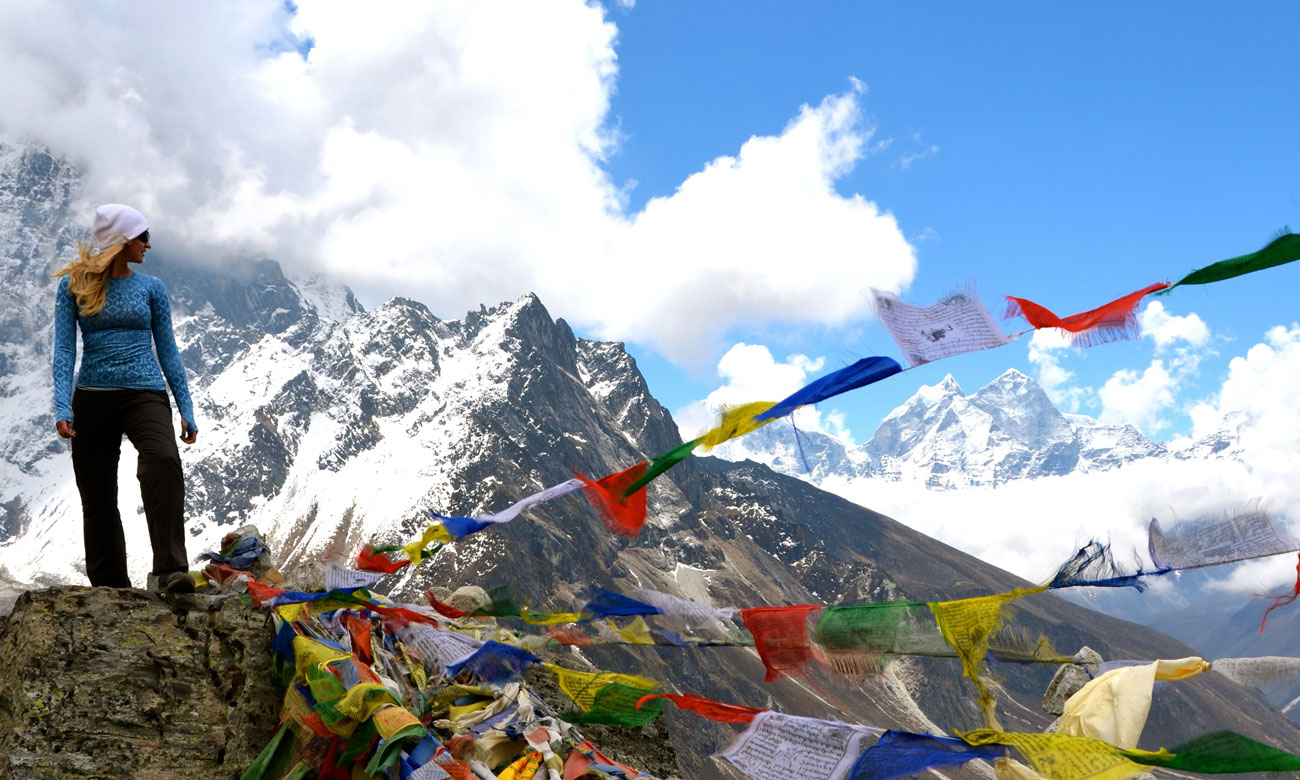
Everest Base Camp (EBC) trekking with a helicopter return trip is the world’s most famous trekking destination in Nepal; it is one of the best-selling luxury trails in Nepal. It is a dream trekking trail for adventure lovers. From Kathmandu, we fly up to Lukla for the Everest Base Camp dream trek, which starts from here, and we begin our adventure landing at this tiny airstrip. The next few days are spent trekking through the heartland of the Sherpa village. Passing Buddhist monasteries with a view of Everest getting closer every day. We will have rest days in the villages of Namche and Dingboche. It will allow us to explore the region and to acclimatize, which is very essential. During the Everest base camp trek, our goal is to summit the Kala Pattar (5545 m), which is higher than Everest Base Camp, with splendid views of Nuptse and Everest.
After trekking to Kala Pattar, we return by helicopter, flying back via Lukla, respectively. For the more adventurous, there is an option of returning over the Cho La pass to the Gokyo valley and then ascending Gokyo Ri on the Everest Base Camp Trek. We provide the best lodges run by Sherpa families. Nepal Himalaya Tours will recommend the Everest Base Camp Trek with helicopter return for those guests who want to discover the mountain with an adventure holiday in Nepal.
How difficult is the Everest Base Camp Trek?
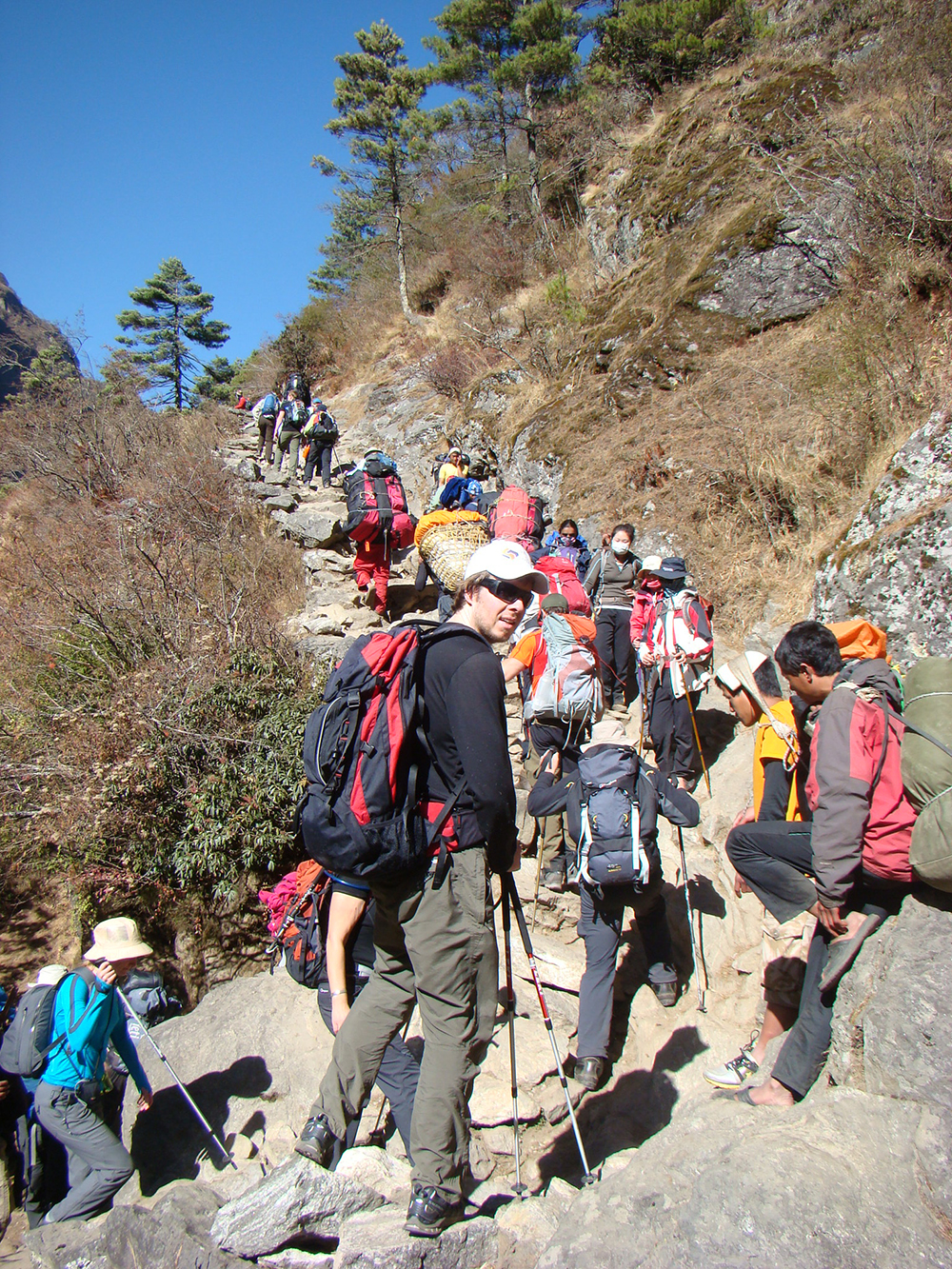
The Everest Base Camp Trekking is a challenging trekking trail in Nepal; it is suitable for passionate walkers who have the ability to walk at least 5 to 8 hours a day with a light rucksack. On some days we might even need to walk for 6 to 8 hours. Walking in higher altitudes is more physically demanding than walking in the lower altitudes; however, if we are in excellent health with average physical fitness, have a positive attitude, and have strong determination, we may accomplish the trek successfully. Exercising and jogging regularly is a good idea to enhance our strength and stability. Previous trekking experience is not compulsory for the trek. Participants with pre-existing medical conditions such as heart, lung, and blood diseases should inform us before booking the trips.
Accommodation
We provide you the deluxe hotel accommodation in Kathmandu as per your requirements, and teahouse lodges will be used during the trekking. All accommodations are on a twin-shared basis. However, tea houses in some places only have shared washing and toilet facilities. Also note that single rooms are readily available in Kathmandu and the trekking area at lower elevations, but it might be difficult to find them at higher elevations. So do not expect deluxe accommodation in the rural areas. However, we will provide you the best one available.
Best Time to Travel for Everest Base Camp
The weather in the Everest region may change suddenly during your trekking trails. Wildflowers and rhododendron bloom throughout the spring months, March to May. As a result, it depicts the colorful route of strolling. The sky is bright, and the mountain and its lovely environs are clearly visible thanks to the moderate temperature. The Sagarmatha National Park animals and the tallest mountain range in the world, Mt. Everest, were both wonderful opportunities for you to explore. Although it doesn’t get too chilly in the morning or evening, it becomes rather hot throughout the day. Consequently, spring is regarded as the ideal season for an Everest Base Camp Trek. Another perfect time to see the magnificent view of the Everest region is in the autumn, from September to December. Comfortable and mild weather is present. The sky has a sunny, inviting appearance. The weather on the trekking trails is ideal for strolling.
Itinerary
You will be welcomed by Nepal Himalaya Tour’s staff and transferred to the hotel. Overnight at your hotel.
Kathmandu is the historical and cultural heart of Nepal. So during the sightseeing tour you will visit Shyambhunath, Boudhanath, Pashupati Temple, and Historical Durbar Square. In the evening you will be briefed about your upcoming trip to Everest Base Camp Trekking.
You have a scenic flight of 30–35 minutes to Lukla (2800 m) from Kathmandu. In Lukla you can see the airline office and numerous lodges. The trail from Lukla leads you to Chablung (2700), and it descends steeply to the Tharo Kosi, which is also known as Kusum Kangru Khola (river). Beyond the Tharo Kosi Bridge, the trail climbs to Ghat (2590) and again climbs to Phadking. In Phadking you can climb to the gompa to see the view of the high peaks. Overnight at Phadking.
From Phadking the trail follows the Dudh Koshi River and reaches Zamphuti. From here you can see excellent views of Thamserku peak. Then the trail climbs to Chomoa, the site of an agricultural project. From Chomoa, the trail again climbs to Monjo (2840 m) and enters the Sagarmatha (Everest) National Park (1148 sq km, established in 1976). Walking some distance up, you will be at Jorsale (2830 m), and after a long climb where you have the view of Mt. Everest peeking over the ridge of Nuptse (7879 m), the trail reaches the street of Namche Bazaar. Overnight at Namche Bazaar (3420 m).
After having breakfast, do some sightseeing around Namche Bazaar. Then you can hike to the Everest View Hotel, the ideal place to overview some of the outstanding mountains such as Mt. Everest, Ama Dablam, Thamserku, Lhotse, etc. You can walk around the Khumjung valley, Hillary School, and Khunde Hospital and then return back to Namche. In the center of Namche, you can visit the mountaineering museum and visit the Sagarmata Pollution Control Committee (SPCC). In Namche Bazaar you can spend some time interacting with the fun-loving Sherpa and Rai people. In Namche above the police checkpost you will see Sagarmatha National Park headquarters, and if you want to look at the visitor center, it is open from 8am to 4pm except Saturdays and holidays. Overnight at Namche.
From Namche Bazaar the trail climbs up and down to Sanasa, where the trail descends gradually to Teshinga, and then it drops steeply to Phunki Thanga. Climbing two hours from Phunki Thanga, you will reach Tengboche. Tengboche is a religious place for the Sherpa people and the entire Solukhumbu area. Here you will see the Tengboche Monastery, which is one of the oldest monasteries in Nepal. Overnight at Tengboche.
In the morning, our route ascends gradually, high above the Imja Khola, passing the teahouses at Orsho before crossing the Imja Khola and old glacial moraines to our lodge in the settlement of Dingboche. The scenery is spectacular; although Everest has disappeared behind the Lhotse-Nuptse ridge, the huge peaks that tower above the eastern end of the valley are ample compensation. We are now almost completely above the treeline. In clear conditions, look out for spectacular sunsets here and on Ama Dablam. Today’s walk is quite tiring due to the altitude, so it is important to take notice of your leader’s advice and recommendations regarding rest and fluid intake.
Dingboche is a beautiful patchwork of small fields enclosed by stone walls protecting the crops of barley and potatoes from the cold winds. It is occupied mainly through the monsoon months, when large numbers of yaks are brought here to graze on the valley pastures. Behind our lodge the huge rock faces of Taweche seem to soar to the heavens. Your leader will advise on activities today; the short excursion up the valley towards Chukung is worthwhile. The views are fantastic in this valley; the towering south face of Lhotse to the north, Island Peak in the center of the valley, and the fluted ice walls of unnamed peaks that line the southern end of the valley form a hauntingly beautiful sight. The other option, which is better for acclimatizing, is a hike up the hill behind our lodge, which will afford great views of the fifth-highest mountain in the world, Makalu (8481 m).
In the morning we ascend the small ridge behind the village above the Pheriche valley. From the Chorten at the top, Taweche and Cholatse (6440 m) make for a striking scene as they seem to lean forwards from across the valley in the west. To the north, Lobuche Peak (6119 m) and the snowfields of the Cho La dominate the skyline. The walking is now generally fairly flat on wide-open fields, but do take your time and ensure you are well hydrated. Late in the morning we cross the Khumbu Khola at Dughla (4620 m) and take a light lunch at the foot of the huge terminal moraines of the Khumbu Glacier flowing off Everest. In the afternoon, there is a solid and quite steep climb on a rocky trail to the top of the moraine. On the crest of the ridge, you pass a line of memorial cairns, built in memory of the Sherpas and climbers who have died on various Everest expeditions over the last 50 years. From here the view is spectacular; Pumori (7145 m), Lingtren (6697 m), Khumbutse (6623 m), and, across the border in Tibet, Changtse (7550 m) are seen at the head of the valley, whilst Everest is hidden behind the towering walls of Nuptse and Lhotse. We then follow the valley stream to our lodge at Lobuche, arriving early afternoon. Today is a tiring day, but the fantastic scenery makes it all very valuable.
After an early rise, we have a short trek to Gorak Shep, where we will have breakfast and some tea before beginning the walk up to Kala Pattar. (5545 m) A gradual ascent enables you to build the slow, steady rhythm required when walking at high altitude. From the lodge the ascent is quite steep, so start very slowly and try to ascend at a steady rhythmic pace. Our goal, Kala Pattar, is the rocky hilltop below Pumori. It is a tough walk, but the view from the top surpasses the wildest imagination. It will probably take a good hour and a half to reach the summit from Gorak Shep, although lower viewpoints will provide views almost as good. Pumori, Nuptse, Changtse, Ama Dablam, Taweche, Kantega, and Everest—the highest mountain in the world—and some 200 meters below, the area of the Everest Base Camp can be seen in a bowl at the bottom of the Khumbu Icefall. For many trekkers, reaching Kala Pattar is a very emotional experience, and it is worthwhile spending as long as you wish to savor this special moment. The descent back down to Gorak Shep is easy. Upon arrival in our lodge in Pheriche, hot tea will be waiting and, a short time later, our evening meal.
In the early morning, breakfast will be served at the tea house. Afterward, you will be taken to the take-off point of the helicopter at Gorakshep. It is about a 1.5-hour flight to Kathmandu, depending on the weather window. The scenic mountain flight follows the route with narrow gorges of the Khumbu region. On your way to the base camp, you will fly over the small villages, which were your stopovers. The helicopter will stop at Lukla to refuel and then continue flying toward Kathmandu. In the afternoon, explore the downtown at the tourist market in Thamel. A farewell dinner will be served with a culture show in the evening.
The final day at Kathmandu, you will have breakfast at hotel we then transfer you to Kathmandu Airport 3 hours before of your flight schedule with the beautiful memory of Nepal Himalaya.
Includes / Excludes
Trip Includes
- All meals during trek (Breakfast, Lunch and Dinner).
- All Accommodation at Kathmandu and during trek.
- Kathmandu to Lukla and back to Kathmandu airfare.
- English speaking Sherpa expert guide and porters.
- Sagarmatha(Everest) National park fees.
- Trekkers' Information Management System (TIMS) fees.
- Accommodation at 3-star hotel in Kathmandu on twin sharing basis.
- All guided sightseeing tour in Kathmandu.
- Airport Pick Up and Drove by private car.
- Equipment clothing for porter & staffs
- Insurance for all staff and porters
- Farewell dinner at final night.
Trip Excludes
- Nepal entire visa (available in Kathmandu airport).
- International flight
- Lunch and dinner during hotel stay in Kathmandu.
- Personal gears and clothing (available on hire).
- Any expenses incurred in emergency evacuation/road block due to any reason.
- Table drinks (Tea, Coffee, Cola, alcoholic drink), snacks while walking.
- Traveler's insurance.
Route Map

Know Before You Go
- Personal expenses, such as extra foods, drinks, and snacks, are not included in the package. It’s advisable to carry extra cash.
- Always carry a reusable water bottle and purification tablets to ensure you have access to safe drinking water.
- You are traveling to Nepal for Trekking; you must need Nepal visa. It is also available at immigration office at Kathmandu airport.
- Prepare for varying weather by packing clothing appropriate for the season and the regions you plan to visit.
- The rural side can’t accept credit cards, so it is recommended to have enough cash for your expenses.
- At tourist points, maintain a safe distance from wild animals and follow your guide’s instructions to avoid any risks.
- When booking international flights far in advance, be conscious, as weather conditions in Nepal can lead to delays or cancellations.
- The travel insurance is strongly recommended to cover potential emergencies, such as medical care and trip interruptions.